Luckin vs Starbucks in China — Part 1: How the Coffee War Began
Starbucks reached 6,000 mainland China stores by 2022; Luckin passed 7,195 and 6.6% of the market. Part 1 of a three-part series.
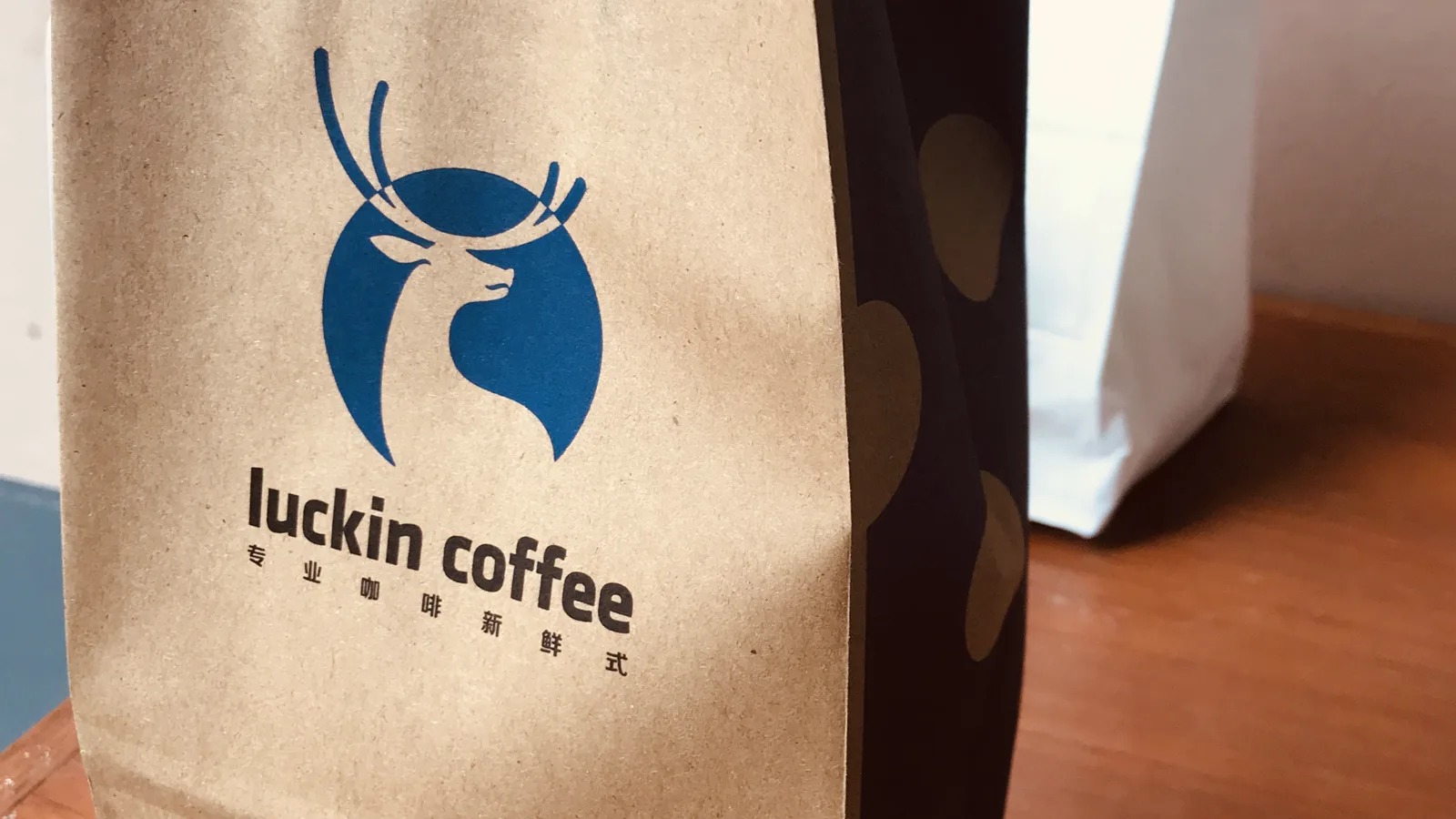
This is the first part of a three-part series about Luckin vs Starbucks in China. Read Part 2 and Part 3.
In 2018, we started to read or hear news about the rising of Luckin Coffee in China and its possible threat to Starbucks’ dominant position in the Chinese coffee market. The story of a Chinese “David” battling against the Goliath of coffee started to gain traction in coffee and financial circles; in 2019, news of this story reached mainstream media abroad.
After Luckin went in for an IPO in the US, its value reached US$ 3.9 Billion dollars in 2019. It was the coffee unicorn of China, and investors felt Luckin was posing a greater threat to Starbucks than before.
However, in 2020 news about Luckin’s suspicious records after an audit, later found to be RMB 2 billion (around US$ 281 million dollars in today’s currency exchange rate) in inflated sales numbers, brought down its stock price and invited more scrutiny from Chinese and US authorities on the company’s financial situation.
In this first part of a three-part series, we will explore the rise of both companies in China: when both first opened in China, and which brand operates more outlets.
When did they both first open in China?
The beginnings of Luckin and Starbucks in China are two decades apart, with Starbucks being the pioneer of coffee shops in China.
According to Starbucks Stories and News, Starbucks opened its first store in China’s capital in 1999, a time when China was still a heavily tea-drinking culture and Beijing’s Olympic Games were 9 years away in the future. It was a bold move as China’s coffee consumption was mostly instant and soluble coffees.
One year later, in May 2000, Starbucks opened its first store in China’s financial capital (Shanghai), next to the iconic Oriental Pearl Tower in Lujiazui, a landmark of Pudong New Area. It was its biggest store in the world for many years, until Starbucks opened its Shanghai Starbucks Reserve Roastery in Dec. 2016, with 2,787 sqm. But this title was then taken by Chicago’s new Starbucks Roastery in Nov. 2019, with a size of 3,251 sqm.
Distribution of Starbucks stores in China is heavily focused on first- and new first-tier cities: approx. 57% of its stores are located in those dozens of cities which, in 2017, had a GDP higher than ¥1 trillion RMB (approx. US$140 billion dollars), a higher economic output than “Myanmar, Cambodia, Uganda and Estonia combined”; while the rest of its stores are scattered across second, third, fourth, and fifth tier cities.
Fast-forward to Sept. 2022, Starbucks opened its 6,000th store in China (at Lippo Plaza in Shanghai), which also accounted for Starbucks’ 1,000th store in the city. Starbucks is inseparable from Shanghai’s coffee culture, with its stores in the city accounting for around one-sixth of its total stores in China. With this, Shanghai became the first city in the world with 1,000 Starbucks stores.
Luckin’s story follows the path of Starbucks, as Luckin opened its first store in Beijing too (Oct. 2017). From its early beginnings, it attracted the interest of investors. The company received an initial investment of 1 billion RMB (around US$140 million dollars) from Lu Zhengyao.
Mr. Lu and Ms. Qian, both former executives of CAR Inc (the largest car rental company in China), were the first shareholders of Luckin. The logic behind the company was to be more of an Internet company, rather than a traditional coffee company. This was clear with the launch of its own APP, amassing data from its APP users, while also having sales and revenue numbers to show investors and continuing to raise money.
Luckin’s strategy was to direct all orders and customers’ traffic through their APP, and giving first-timers and loyal customers different types of promotions, usually based on giving away many free cups of coffee when placing individual orders and offering heavily subsidized prices, so individual customers “had” to share their free cups of coffee with their colleagues, classmates and friends, spreading the brand’s recognition.
Initially, Luckin’s APP was far from perfect and had some issues, with some customers complaining that it was not user-friendly or smooth, while its coffee quality was not on par with the products of Starbucks, Costa and other coffee chains.
Luckin reached its first 500 stores in May 2018, and it continued keeping its aggressive expansion in the market. Its business model, in terms of store size, is different from Starbucks, as Luckin focuses on small stores, with an area of 5-20 sqm, which are in office buildings, schools, airports, business districts, etc.
The small size of its stores is due to the company’s focus on delivery services since its very first stores, instead of being a “third space”. Using either Luckin’s own APP or through Chinese main delivery service APPs, Meituan (美团 in Chinese) and Ele.me (饿了么 in Chinese), customers place their orders and either pick them up themselves or get their coffee delivered to their offices, schools, or homes.
Distribution of Luckin stores in China follows a similar path as Starbucks’ store distribution, with around 66% of Luckin stores in first and new first tier cities (May 2022).
In Sept. of 2022, Luckin announced it had more than 7,195 stores (6.6% of the total Chinese coffee shops market), winning the race against Starbucks in the number of stores opened in China. Not only that, but Luckin’s Q4 2022 financial results showed high earnings and healthy finances.
Which brand is more popular and operates more outlets?
China has around 110,000 coffee shops, of which small and independent stores represent around 87% of the total. By contrast, Luckin had more than 7,200 stores (6.6% of the total market) by end of Q4 2022, while Starbucks was celebrating its 6,000th store (Sept. 26, 2022) in Chinese mainland, which represents around 5.5% of the total market.
Based on both companies’ statements and commitments of 2022 and near future, Luckin and Starbucks are committed to keep opening stores. Jinyi Guo, Luckin’s Chairman & CEO, told Reuters last year “we believe the potential of China market remains huge.”
Howard Schultz, previous Interim CEO of Starbucks, during Starbucks (SBUX) Q2 2022 Earnings Call mentioned that “I remain convinced Starbucks’ business in China will be eventually larger than our business in the U.S.”
In terms of brand’s popularity, Luckin and other local Chinese brands are challenging Starbucks dominance in the market. According to Sohu News, the most popular coffee brand in China (2022) was Luckin in first position, while Starbucks ranked third.
The top 10 list included Luckin Coffee, Manner Coffee, Starbucks, Seesaw Coffee, Tim’s Coffee, Algebraist Coffee, Peet’s Coffee, % Arabica, M Stand and Lucky Coffee (幸运咖 in Chinese, not to be confused with Luckin).
This is the end of the first part of the series; in the second part, we will explore how do the two companies operate differently. Continue with Part 2 →
Whether you’re looking for Data & Market Services for your coffee brand; Production and Sustainability Solutions for your coffee products; or Store Concept and Development for “brick-and-mortar” coffee projects, contact Ad Astra Coffee Consulting to learn more about our services and solutions for Chinese coffee market.
Follow Ad Astra Coffee Consulting on LinkedIn for latest news and updates from China’s coffee market.