Coffee at 3,650 Meters: What I Found in Lhasa's Specialty Coffee Scene
A firsthand report from six days on the ground, and what three coffee shops reveal about China's most unexpected specialty market
The Highest
Coffee Shops I’ve Ever Set Foot In
Last month, I spent six days in Lhasa. Elevation: 3,650 meters (12,000 feet). Oxygen level: roughly 65% of sea level.
And I found something I didn’t expect: a real specialty coffee scene.
Not one shop. Not a Starbucks. Out of hundreds of coffee shops in Lhasa, I visited three distinct, independently owned coffee shops, each with its own identity, equipment, and approach to the craft.
For some context, Lhasa is a city of fewer than 900,000 people, sitting on the Tibetan Plateau, 2,500 kilometers from Shanghai.
This isn’t a story about how coffee has “arrived” in this far away and mysterious city. It’s a story about how far China’s coffee culture has traveled, and what that tells us about where it’s going next.
After I visited all three coffee shops, here’s what each one revealed:
Shop #1: Tsaluma
Coffee (Specialty Coffee & Bakery)
Location: by the Lhasa River, vibe: specialty coffee + bakery with serious equipment
Tsaluma is the kind of shop that would hold its own in Shanghai’s Former French Concession or Seoul’s Gangnam district. Walk in and you’re greeted by warm lighting (all thanks to tons of sunlight that a place like this will get as a high-altitude plateau city) coming from large windows, retail shelves stocked with coffee bags, vinyl LPs and books.
The barista station was built around brand new La Marzocco equipment: a semi-automatic espresso machine flanked by two LM grinders… all brought from Shanghai, an investment of over 300,000 RMB in coffee equipment alone.
This isn’t entry-level gear. This is the same setup you’d find at top-tier specialty shops globally.
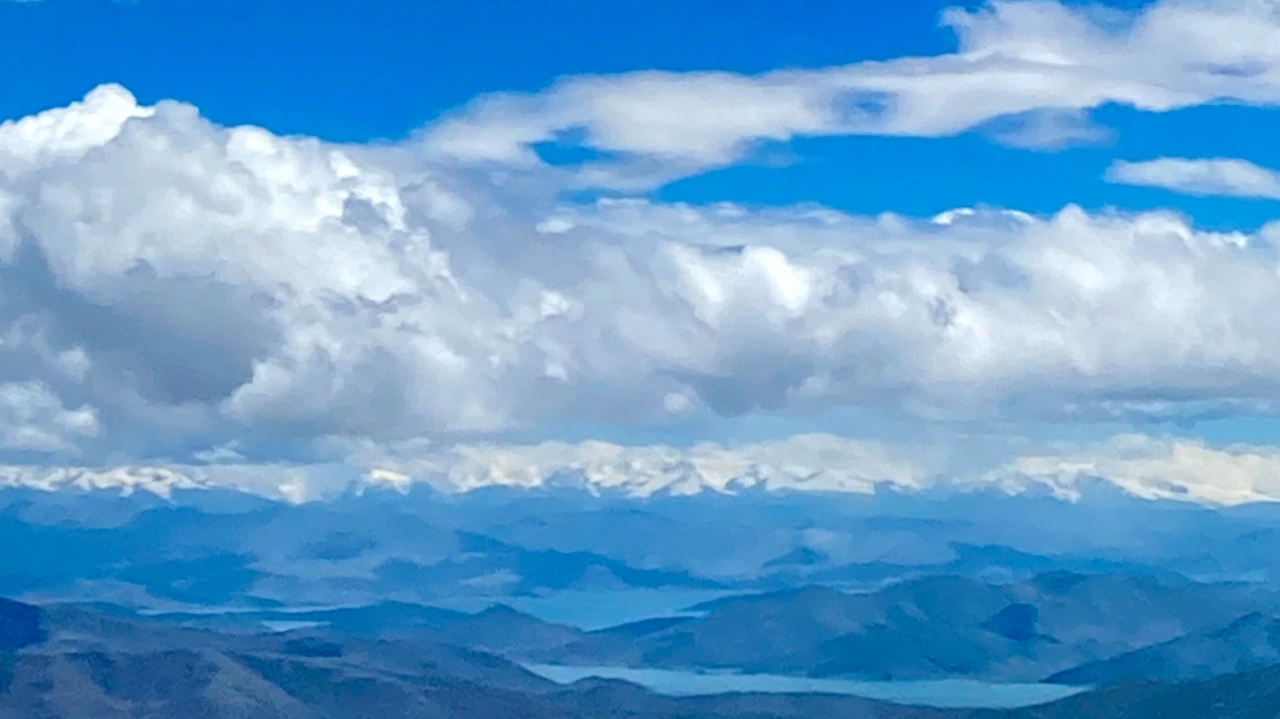
What makes Tsaluma special isn’t just the equipment, it’s the view. Through its large windows, you get a beautiful mountainous panorama. You’re sipping a layered iced signature coffee while looking at mountains and the Lhasa river that have molded life and human settlements in this plateau for thousands of years. That’s an experience no chain can replicate.
The bakery component adds another dimension. Tsaluma isn’t just selling coffee, it’s selling a destination. A place to sit, work, eat (they have an awesome homemade Tiramisu!), and take in one of the most dramatic backdrops any café in the world can offer.
Strategic takeaway: Premium experience positioning works even in remote markets, if the experience is genuinely unique. Tsaluma proves that “destination café” isn’t just a first-tier city concept.
Shop #2: KSCOFFEE
Location: Lhasa city center, vibe: Roaster-retailer with local brand identity
KSCOFFEE takes a different approach. Where Tsaluma focuses on the barista & bakery experience + view, KSCOFFEE focuses on production and product.
The shop has its own roasting setup on-site: new Probat roasting machine, yellow containers for green and roasted coffee, green bean jute bags nearby; they’ve developed their own retail brand: “COFFEE & MOUNTAINS”, with coffee bags posters featuring mountain imagery that directly connects to their brand and motto (the mountains are calling and I must go). This is origin branding at its most literal and effective.
They also do something clever: they’ve created many signature coffee drinks; I had one called Rango: a lemon juice + homemade syrup + tonic water coffee beverage that’s clearly designed for social media sharing and word-of-mouth. It’s not trying to be a Melbourne flat white or a Kyoto pour-over. It’s a drink that says “this is our take on signature coffees.”
Strategic takeaway: Vertical integration (roasting + retail + branded products) creates more revenue than what normal coffee shops can generate. KSCOFFEE owns its supply chain from green bean to cup to bag, and that’s powerful even at 3,650 meters elevation.
Shop #3: Nindo Coffee
Location: Traditional Tibetan courtyard, vibe: Cultural immersion meets coffee
Nindo Coffee was my favorite discovery of the trip (thanks to Tsomo for inviting me there), because it does something very few coffee shops/stores elsewhere in China’s coffee market are doing: it fully embraces local culture rather than importing a foreign template.
The shop is set in a traditional Tibetan multi-story courtyard (I heard it’s 200 years old), its architecture imbued with local design elements, open-air seating under a sky so blue it didn’t look real. What sets Nindo Coffee apart are these small but curated details:
-Paper cups printed with Tibetan script
-Branded tote bags with Tibetan text
-Traditional serving vessels (not ceramic latte cups, actual Tibetan tea/coffee bowls)
-Framed traditional art on the walls (thangka-style folk art)
Nindo isn’t pretending to be a standard Shanghainese coffee shop, or a Tokyo coffee shop spot. It’s unapologetically Tibetan, and it serves great coffee within that cultural frame.
Strategic takeaway: Localization isn’t just translating your menu into the local language. It’s rethinking the entire customer experience through the lens of local culture. Nindo shows that the deepest form of coffee localization is cultural & cuisine, not just linguistic.
Three
Shops, One Pattern: What Lhasa Tells Us About China’s Coffee Frontier
After visiting all three, a clear pattern emerged:
① Equipment standards have nationalized
La Marzocco machines, Probat roasting machines in Lhasa. The gap between first-tier city equipment and remote-city equipment has effectively closed. Ten years ago, you’d find automatic coffee machines, standard coffee filter brewing equipment and instant coffee mix in a city like Lhasa.
Today, you find the same gear as Shanghai or Shenzhen. Supply chains and financing options have made professional-grade equipment accessible everywhere.
② Independent operators are winning on differentiation, not scale
None of these three shops are chains. Each has carved out a distinct position: **Tsaluma **= alpine view + specialty coffee & bakery destination; **KSCOFFEE **= roaster-retailer; Nindo = cultural experience.
They’re not competing on price (there’s no 9.9 RMB cup of coffee there). They’re competing on identity. And in a small market like Lhasa, identity is everything.
③ The “localization ceiling” is much higher than most brands realize
Most international brands entering China localize at the surface level: Chinese menu, Chinese staff, maybe some localized décor. Nindo goes much deeper: Tibetan script, Tibetan serving vessels, Tibetan courtyard architecture, Tibetan art. And it works.
Customers don’t just buy coffee there; they buy into a cultural experience that feels authentic.
④ Remote cities are no longer “too early.”
Lhasa has a population under 900,000, and yet, it has around 800 coffee shops (including a handful of stores from Luckin and other big domestic players). There are three legitimate specialty shops (among many more), each with a clear concept, quality equipment, and paying customers.
If Lhasa has a viable specialty scene, which city in China doesn’t?
My
Take: Why This Trip Changed How I Think About “Tier 3–4” Cities
I’ve written about Tier 3–4 city opportunities before. But visiting Lhasa made something concrete that was previously abstract.
When we talk about “lower-tier cities” in consulting rooms, we tend to picture places like Hefei, Changsha, or Foshan: second-tier provincial capitals with several million people.
We don’t picture Lhasa. We don’t picture altitude sickness. We don’t picture a consumer base that’s culturally, linguistically, and geographically distinct from coastal China.
And yet, the same patterns are present: independent operators investing in quality equipment, building differentiated brands, creating experiences that chains can’t replicate.
The implication is straightforward: China’s coffee market is deeper than anyone’s current market-entry models account for. The conventional wisdom says “focus on the top 20 cities.” The reality on the ground says the action is already happening in places that don’t even make any Power Point slide’s priority list.
For brands planning Asia expansion, the question isn’t whether to enter lower-tier markets. It’s how fast the competitive landscape will mature before you get there.
Closing from
Chengdu (back at 600 meters altitude)
Three shops. Three concepts. One city of under 900,000 people at the roof of the world.
Each of these operators — at Tsaluma, KSCOFFEE, and Nindo — is making a bet that Lhasa wants more than instant coffee and chain-store convenience. They’re betting that consumers at 3,650 meters elevation care about origin, equipment, atmosphere, and cultural authenticity.
From what I saw over six days, that bet is paying off.
China’s coffee story isn’t being written only in Shanghai’s skyscrapers and Shenzhen’s tech parks. It’s also being written in Tibetan courtyards, by rivers and mountains with Himalayan views, and behind coffee roasters making their craft in thin air.
The brands that understand this will find opportunities in places their competitors haven’t even looked at yet.
Exploring China’s coffee frontiers?
At Ad Astra Coffee Consulting, we go beyond the headline numbers. From first-tier market entry strategy to on-the-ground intelligence in emerging markets across China and Asia, we help brands find their footing in the world’s fastest-evolving coffee landscape.