Indonesia's Coffee Chains Just Outgrew the Global Giants. Here's How They Did It.
How a ~US$3.2–3.5B homegrown chain market, an IDR 18,000 price point, and one IPO are rewriting the playbook for entering Asia's most underrated coffee market
The Market Global Brands Didn’t See Coming
Indonesia is now the world’s fifth-largest coffee consumer, and its coffee chain market is the largest in Southeast Asia at roughly **US$3.2–3.5 billion **(2025, coffee + tea chains combined).
The surprise isn’t the size. It’s who owns it.
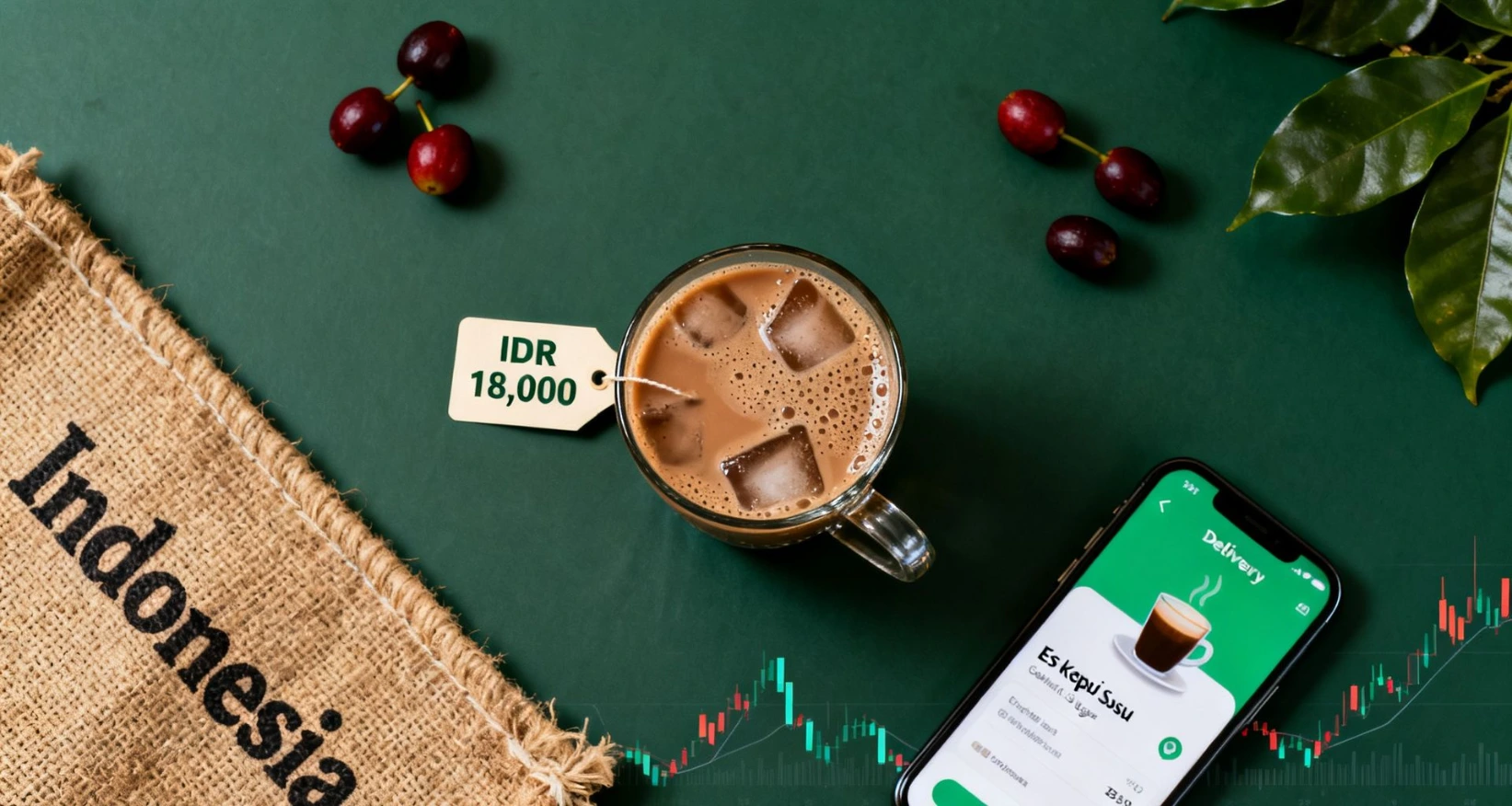
Walk the coffee districts of Jakarta, Bandung, or Surabaya and you’ll see Kopi Kenangan, Janji Jiwa, Fore Coffee, and Kopi Tuku on nearly every corner. Starbucks still has presence, but the growth story belongs to homegrown chains that cracked a price point global brands couldn’t touch: IDR 18,000–22,000 (roughly $1.10–1.40) per cup, about half of Starbucks’ pricing and a tier street stalls never claimed.
Then came the signal that changed the narrative: Fore Coffee’s IPO on the Indonesia Stock Exchange in 2025, raising about Rp 353 billion (US$21 million) and listing premium “slow bar” concepts alongside its grab-and-go core.
An Indonesian coffee chain can now go public. That changes everything about how the market is read.
This is the story of how Indonesia’s coffee chains outgrew the global giants, what the “systems war” means for anyone entering SEA, and why the region is the most underrated expansion corridor in Asia.
The Numbers That Matter
① The Homegrown Price Point Is a New Tier, Not a Discount
The conventional read of Indonesia’s chain boom is “cheap coffee wins.” That misses the point.
Homegrown chains didn’t win by being cheaper than Starbucks. They won by building a new price tier between street stalls (warkop, ~IDR 5,000–10,000) and international chains (IDR 40,000+). At IDR 18,000–22,000, a cup of *es kopi susu *becomes an affordable daily ritual, not an occasional purchase.
Kopi Tuku created the category. Founder Andanu Prasetyo started with a parking-lot experiment in Cipete, South Jakarta in 2015, and his “es kopi susu tetangga” (neighbor’s iced milk coffee) with palm sugar (gula aren), priced at IDR 18,000, became a national phenomenon. Tuku still runs without venture capital and without franchising, proof that the model works at any scale. Kopi Kenangan scaled the same format to ~1,100+ stores, became Southeast Asia’s first coffee unicorn, and now expands into Singapore, Malaysia, the Philippines, and India with a 2029 IPO target.
The real advantage isn’t price. It’s cultural positioning plus unit economics that work at high volume.
② The Profitability Pivot Is Here
Early venture-funded chains chased growth at any cost. That phase is ending.
Fore Coffee’s IPO signals the shift: Indonesian chains are now expected to show that scale converts into profit. The same maturation we’ve tracked in China’s chain wars, where expansion races gave way to margin discipline, is now arriving in SEA.
The implication for foreign entrants is blunt: the easy land-grab window in Indonesia’s major cities is closing. New entrants arrive into a market where local champions already own the price tier, the brand loyalty, and increasingly the capital markets access.
③ The Systems War Has Started
Momentum Works frames the new phase precisely:“brands compete not just on drinks and store experience, but on operating systems, supply chains, and digital infrastructure.”
Chinese entrants like Luckin are testing SEA expansion with exactly that playbook: app-driven ordering, centralized supply, aggressive unit economics. Regional champions are responding by systematizing their own operations.
For any brand entering SEA, the lesson is the same one playing out in China: entry requires an operational platform, not just a recognizable name. Digital ordering, supply chain strength, and execution discipline decide who survives the next phase.
What This Means for Brands Entering Indonesia & SEA
Don’t compete on price. Compete on a tier they don’t own
The IDR 18,000–22,000 tier is taken by locals with cultural gravity. Premium specialty and single-serve formats (capsules, premium instant, RTD) sit above the grab-and-go tier and face less direct competition.
Capital markets access is now a real advantage
Fore Coffee’s IPO means local champions can raise expansion capital domestically. Foreign entrants should expect well-funded, locally-rooted competitors, not under-capitalized upstarts.
Digital infrastructure is the entry ticket
Go Food and Grab Food supercharged Indonesian coffee takeaway, and average orders climbed from 1 to 3 cups per transaction. Any market entry plan that doesn’t integrate delivery platforms, app ordering, and supply-chain software from day one starts behind.
Secondary cities are the frontier
The Jakarta land-grab is over. Surabaya, Bandung, Medan, and Bali are where both local chains and foreign formats are expanding. That’s where the next chapter gets written.
The Regional Frame: Indonesia Consumes, Vietnam Produces
SEA’s two coffee giants are mirror images. Indonesia is the region’s largest consumer market, with homegrown chains and a fifth-place global consumption ranking. Vietnam dominates production: record 2025 exports of US$8.92 B (+58.8% Yo Y) and domestic consumption forecast at 4.9 M bags by 2026.
For brands and investors, the complementary logic is clear: Vietnam is where supply chains and export infrastructure get built; Indonesia is where consumer brands get proven at scale.
And the EUDR clock is ticking for both: Vietnam and Indonesia have roughly five months to finalize national traceability systems before full enforcement. Compliance capacity will become a competitive differentiator, not a checkbox.
Closing from Chengdu
Indonesia is the most underrated coffee market in Asia. Not because of its size, though ~US$3.2–3.5 B in chains and fifth-largest consumption are nothing to ignore. Because of what it proves.
It proves that in Asia’s emerging markets, homegrown brands can out-position global giants by owning a culturally-grounded price tier, then convert that scale into capital markets access.
It proves that the systems war is now the defining competitive dynamic from Jakarta to Shanghai. And it proves that the entry playbook for Asia is no longer “bring a brand and hope for distribution.” It’s “build a platform, own a tier, and move before the land-grab closes.”
The window for entering Indonesia’s major cities is closing. The window for entering the rest of SEA is opening.
Ready to map your next market move?
At Ad Astra Coffee Consulting, we help coffee brands and producing countries navigate exactly these structural dynamics, from China’s speed-to-scale model to Japan’s specialty roasting culture to SEA’s new chain wars.