The Colombian Chain That Sells Indian Coffee
Libertario opened its second Indian café on 3 November, with a roastery inside it. Three of its five coffee profiles are Indian-grown
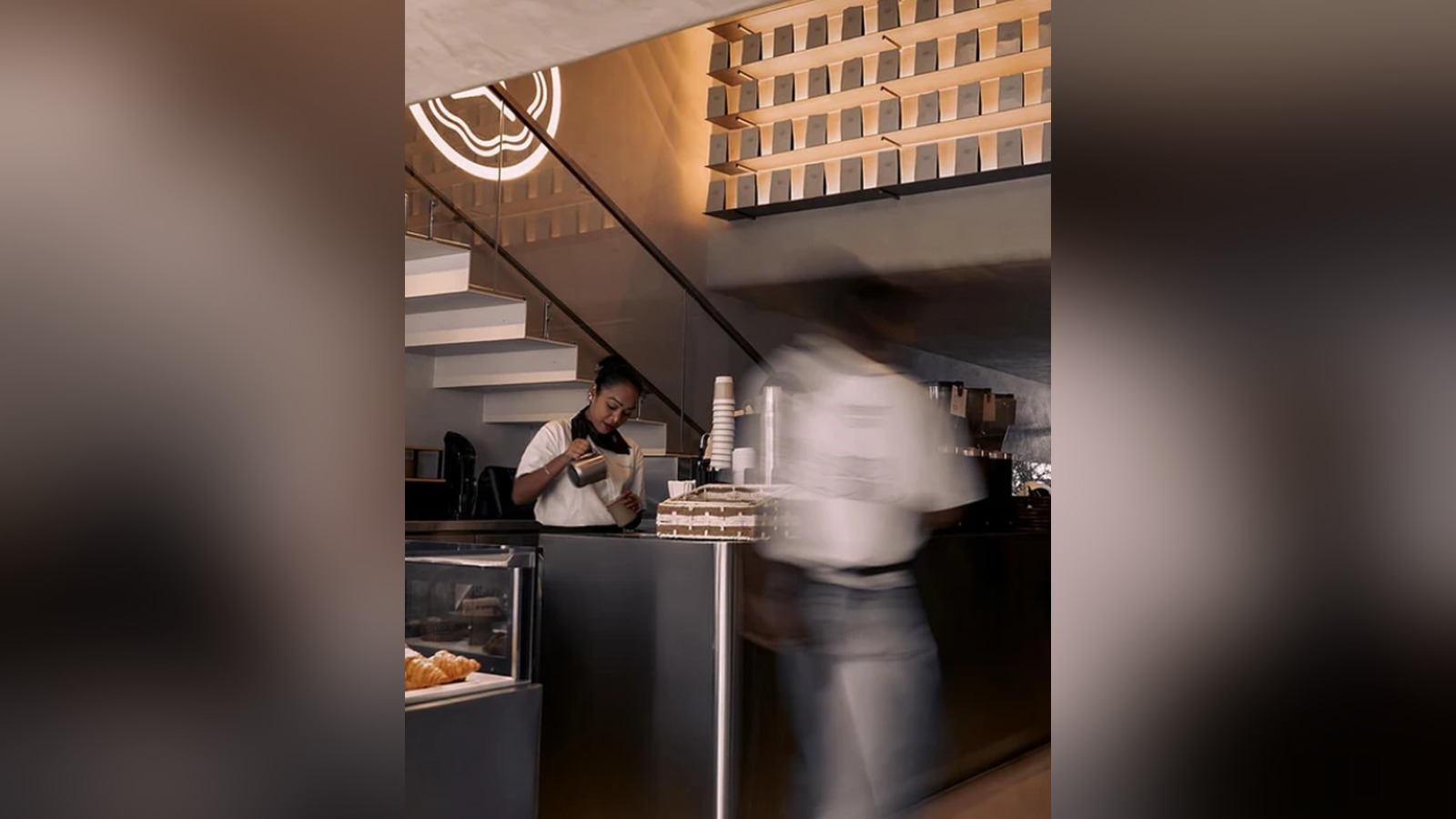
The Counter Tells You the Strategy
On 3 November, a Colombian coffee company opened its second café in India, at DLF Summit Plaza on Golf Course Road in Gurugram. The first was in Delhi’s Greater Kailash 2, in July 2025.
Inside the new store there is a roaster, and a “coffee omakase” — a seated tasting through rare varietals and brewing methods, served as a sequence rather than a cup to take away.
Libertario is not a small roaster testing a market. Founded in Colombia in 2015 by a coffee-producing family, it traces its roots to the La Palma y El Tucán estate, runs cultivation, sourcing, exports and hospitality as one business, exports to 32 countries, and operates in six markets: Colombia, Chile, Costa Rica, Mexico, the United States and India.
Then the number that reframes the opening. 70–80% of the coffee Libertario serves in Colombia, Mexico, Costa Rica and India is locally sourced. In India, three of its five coffee profiles are Indian-origin, and in its first year it partnered with two large Indian estates.
So the newest specialty entrant in India’s café market is an origin brand whose Indian menu is mostly Indian coffee, roasted in India, sold through a format borrowed from fine dining. The Colombian story is not what is in the cup. It is what makes the cup worth more.
The Numbers That Matter
| Metric | Value | Source |
|---|---|---|
| India branded coffee shop market | 5,339 outlets; +600 stores (+12.7%) in 12 months | World Coffee Portal, Project Café India 2025 |
| Forecast | past 6,110 outlets in 2026; over 10,000 by end-2030; 13.2% five-year CAGR | World Coffee Portal, same release |
| Market leader | Tata Starbucks 480 outlets (9% share); Barista 465; Café Coffee Day 425 | World Coffee Portal |
| Domestic share of operators | 79 of 104 branded chains in the report founded in India | World Coffee Portal |
| Café visit frequency | 24% of surveyed consumers daily; 57% at least weekly | World Coffee Portal, 4,000 surveys |
| Average spend per visit | ₹660.86 (USD 7.53) with food; ₹426.22 (USD 4.85) beverages only | World Coffee Portal |
| Libertario founded | 2015, Colombia; family estate La Palma y El Tucán | Company release via ET HospitalityWorld, 4 Nov 2026 |
| Footprint | 6 markets; 32 export countries; cafés, B2B supply, e-commerce | The HinduBusinessLine, 8 Jul 2026 |
| India entry | Delhi Greater Kailash-II, July 2025 | ET HospitalityWorld, 4 Nov 2026 |
| Gurugram flagship | DLF Summit Plaza; opened 3 Nov 2026; first in-house roastery in India; coffee omakase | ET HospitalityWorld, 4 Nov 2026 |
| Local sourcing | 70–80% of coffee served in Colombia, Mexico, Costa Rica and India | The HinduBusinessLine, 8 Jul 2026 |
| India menu mix | 3 of 5 profiles Indian-origin; 2 Indian estates partnered in year one | The HinduBusinessLine, 8 Jul 2026 |
| NCR plan | 5–6 outlets by March, then Mumbai, Bengaluru and Hyderabad over 12–18 months | ET HospitalityWorld, 4 Nov 2026 |
Rupee figures are converted at the rate published with the source, not re-derived here. The outlet counts are counts; no revenue or ticket-price data for Libertario is published anywhere, and none is estimated in this issue.
① The market is compounding on visits, not on beans
India’s branded café segment added 600 stores in twelve months to reach 5,339, and the forecasts run past 6,110 during 2026 and over 10,000 by 2030. That growth is built on frequency and real estate: 24% of surveyed consumers visit daily, 57% at least weekly, and a third of transactions happen after 5pm.
The spend pattern matters more than the store count. Average spend per visit is ₹660.86 (USD 7.53) with food and ₹426.22 (USD 4.85) on beverages alone, and espresso-based drinks often cost double the food they accompany.
India’s café boom is a hospitality business with coffee attached, not a coffee business with seats attached. For a supplier, that means the addressable volume is out-of-home cups, priced and formulated by the operator.
② A two-store entrant cannot buy distribution, so it buys an axis
Against 480 Starbucks outlets, 465 Barista and 425 Café Coffee Day, and with 79 of 104 brands in the market founded in India, a second store is not a distribution play. It is a positioning play, and the positioning chosen is the experience tier above domestic specialty.
That is why the second location got the roaster and the omakase instead of a third city. A roastery inside the café does three jobs at once: it makes “roasted in India” true rather than asserted, it turns the store into a destination rather than a repeat purchase, and it justifies a ticket that a cup alone cannot carry.
The omakase then converts the roaster from equipment into a service you book.
③ The origin story is the price lever, and it points both ways
Here is the part that should interest anyone selling imported coffee into Asia. Libertario sells Colombia as a brand while serving mostly Indian coffee, and both halves of that are deliberate: the local bean controls cost and supply, the Colombian identity controls the price the guest accepts.
Read from the other direction, it is a warning. The competitor for a Colombian or imported origin in an Asian café market may not be a local roaster selling local coffee cheaply. It may be an origin brand selling local coffee expensively, with a better origin story than the importer has, and with the roasting done in-country. Provenance alone no longer separates an importer from a chain that also owns a farm somewhere else.
The hedge is what Libertario itself demonstrates: the two Indian estates, the three Indian profiles, the Colombian lots kept for the top of the menu. A supplier who can offer both sides of that mix is useful to the operator. One who can only offer the far side of it is a cost line.
The Question
If a Colombian brand can sell Indian coffee at a premium by telling a Colombian story, what is your origin story doing that the local bean cannot? 👇
If you are assessing entry into India’s café market, we can map the route with you.