Importing Roasted Coffee to Japan: The 12% Tariff That Decides the Math
Japan pays 2.7 times the green-bean price for roasted coffee, then charges 12% duty to land it. Here is the arithmetic behind that gap.
Japan bought roughly 365,808 tons of coffee in 2024, worth about US$2.55 billion, which makes it one of the world’s largest coffee importers. Nearly all of it arrived green. Roasted coffee accounted for 2% of the volume: some 5,990 tons and US$113 million.
That split is not a matter of taste. It is a duty schedule.
The tariff is the first number to run
Green coffee enters Japan at 0% under HS 0901.11. Roasted coffee enters at 12% under HS 0901.21.
Twelve percent sounds survivable until you see what it attaches to. The duty lands on a product that has already absorbed your roasting cost, your packaging, your export documentation and your freight. Duty is charged on the customs value, so every cost you added between the farm gate and the container is taxed at 12% before the coffee reaches a Japanese warehouse.
For a roaster selling at ¥2,500 (≈US$15.90) retail for 250g, the arithmetic still works. For anyone trying to compete with Italian espresso at ¥1,187 (≈US$7.55), it does not.
Why the green channel dominates
Japan roasts at home, at scale, through a dense network of domestic roasters who buy green and blend to their own specification. Importing roasted coffee means competing with that infrastructure on freshness, on price and on shelf space at the same time.
The 98/2 split is the result. Green is the default because it is cheaper to ship, cheaper to clear and leaves the blending decision with the buyer. Roasted is a niche because it asks the importer to give up control of the roast.
Roasted is small, and that is the point
Work the value per kilogram and the picture changes.
Green imports averaged about US$6.98 per kilogram across the 2024 total. Roasted imports averaged about US$18.86 per kilogram, roughly 2.7 times the green rate. The volumes differ by a factor of sixty; the unit value does not.
Read that as a market signal rather than a rounding artifact. Japan pays a premium for finished coffee, and it pays it to a small number of suppliers. Of the roasted volume, 95% is caffeinated and 5% decaf, which tells you the decaf shelf is served by specialists rather than as an afterthought.
What the Japanese shelf actually pays
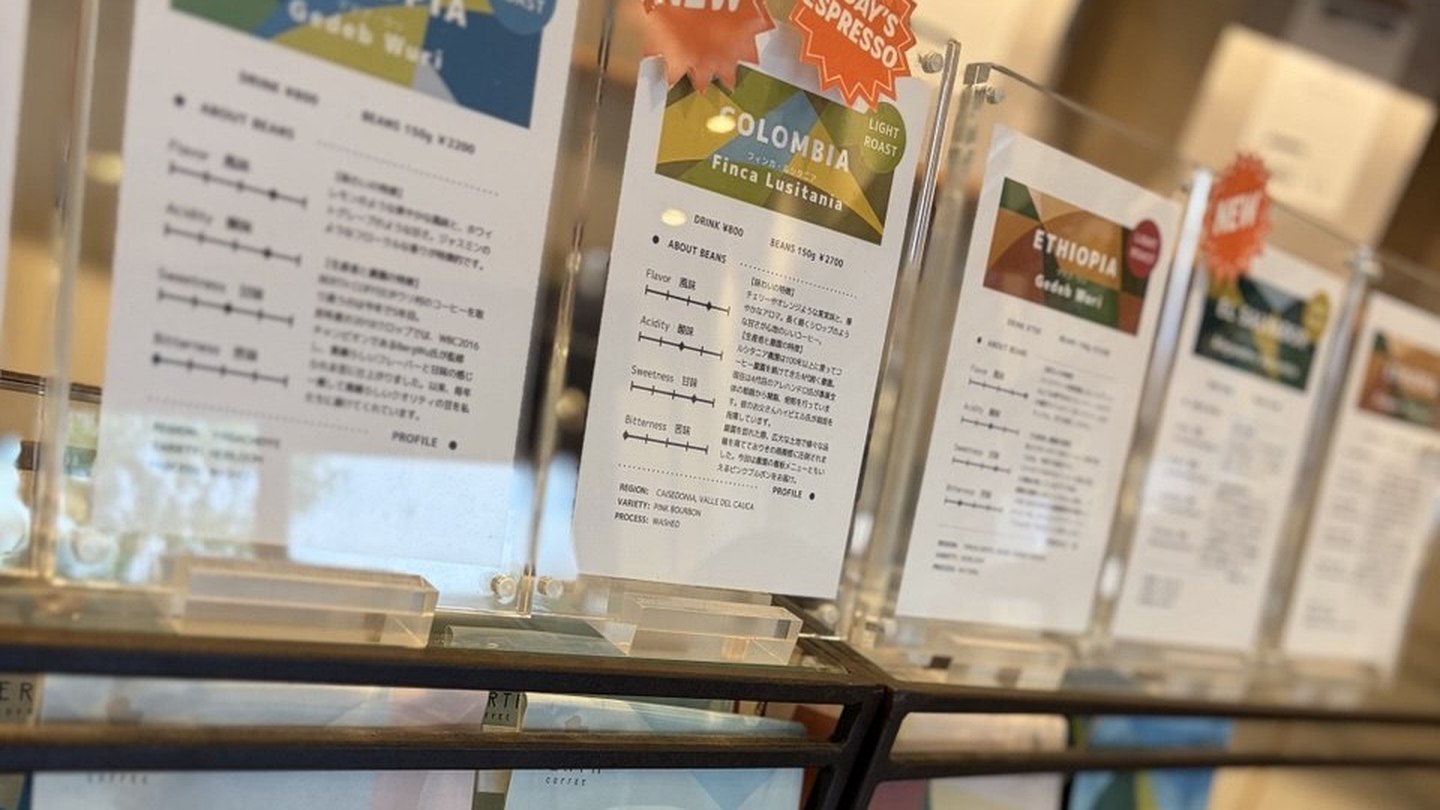
ProColombia benchmarked the Japanese shelf across five segments in 2026. Converted at ¥157.25 to the dollar:
- Specialty and premium, 200–250g: ¥1,862 to ¥2,781, or US$11.84 to US$17.69. illy Classico sits at the bottom, Guggenheimer at the top.
- Italian espresso, 250g to 1kg: ¥1,187 to ¥2,136, or US$7.55 to US$13.58. Lavazza Qualità Rossa anchors the low end.
- Hawaiian and flavored premium: ¥1,980 to ¥2,189, or US$12.59 to US$13.92. Lion and Royal Kona sell origin plus flavor instead of origin alone.
- Professional and HORECA, 1kg: ¥5,184, or US$32.97. Kimbo Prestige.
- Certified organic instant, 100g: ¥1,582, or US$10.06. Mount Hagen.
The useful read is not the spread. It is who is absent from it.
Where Colombia stands
No roasted coffee exports from Colombia reached Japan, according to DANE data. Not a small share. Zero.
Colombian green coffee is well known in Japan and carries a strong quality reputation. That reputation has never been converted into a retail brand. Scanning the benchmarked shelf, no Colombian or Latin American specialty brand appears at all. The field belongs to Italian espresso houses, one American specialty roaster, and origin-story brands from Hawaii and Brazil.
This is the uncomfortable part of the opportunity: the absence is real, and so is the reason for it. A shelf with no Colombian brand is a shelf where nobody has yet proven the model works.
What entry actually requires
Four things have to be true before a first pallet ships.
A Japanese importer of record. You are not selling to a retailer. You are selling to a licensed importer who carries the customs and labeling obligation, and who will want margin and exclusivity in return.
Labeling and certification compliance. Japanese labeling rules, and JAS certification where the claim requires it, are not optional, and the certification path takes months, not weeks.
A trade-fair entry point. SCAJ in Tokyo is where Japanese buyers actually taste new origins. ProColombia’s plan names it as the primary activation channel, alongside cupping sessions with buyers.
Sampling before selling. The plan’s own formulation is that coffee has to be experienced, not explained. For a roasted product competing against domestic freshness, a tasting point does more than a specification sheet.
Green or roasted
A Colombian exporter with volume and no brand should keep selling green. The 0% duty, the domestic roasting base and the existing relationships all reward it.
Roasted becomes the right move when three conditions hold: you have a brand story worth paying 2.7 times the green price for, you can hold a consistent cup across shipments, and you have a Japanese partner willing to carry the 12% through the landed cost.
Japan is a market that pays for finished coffee and rewards consistency over novelty. The tariff does not close the door. It sets the price of admission.
If you are assessing a roasted or green entry into Japan, we can map the route with you.