The Untold Story Behind China's Tier 3 City Coffee Boom
And why it matters for your coffee business strategy
The Question Everyone’s
Asking
“What city in China has the fastest-growing coffee consumption?”
If you answered Shanghai, Beijing, or Shenzhen—you’re thinking too small.
The answer is hiding in plain sight: China’s Tier 3 cities.
Before I explain why this shift will reshape the entire Asian coffee landscape, let me share why I find this so interesting. As someone who’s spent 15 years navigating Asian markets—from Colombia’s coffee areas to Chinese skyscrapers—I’ve learned one thing: the biggest opportunities hide in the places everyone overlooks.
The Numbers That Should
Wake You Up
Let’s start with the basics:
•200+ million people live in China’s Tier 3 and Tier 4 cities
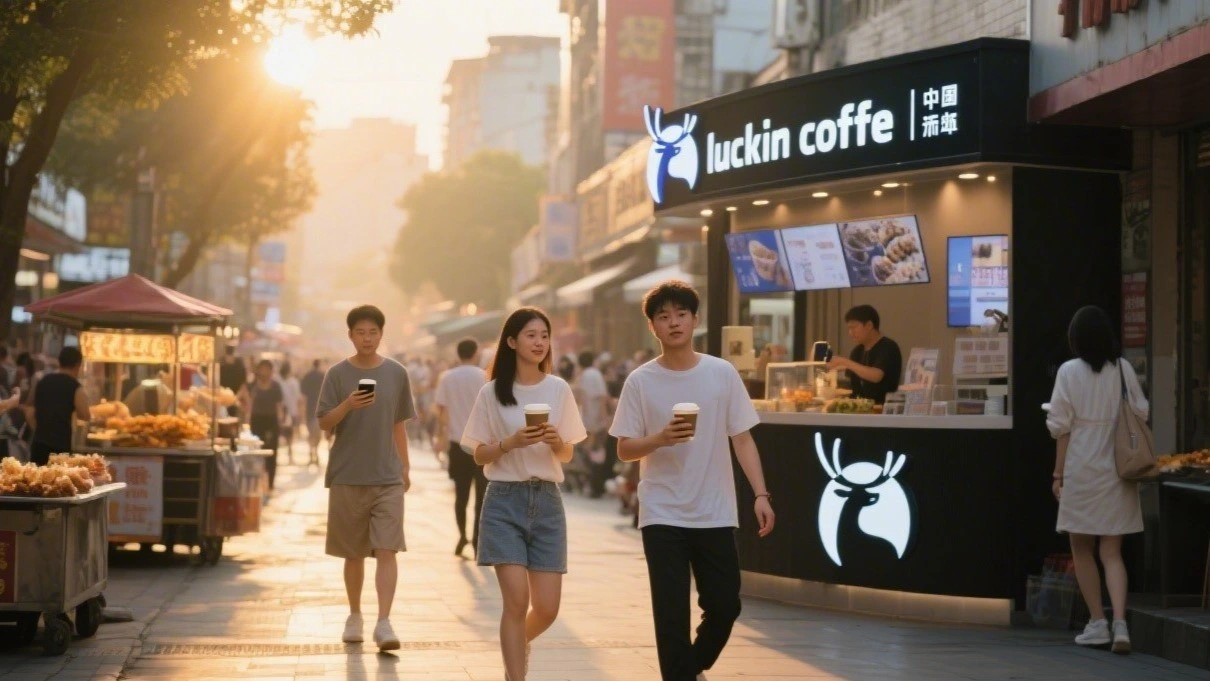
•Luckin Coffee built 30,000+ stores largely by dominating these markets first
•Starbucks announced aggressive expansion into counties and smaller cities
•Cotti Coffee (founded 2023) already has 16,000+ stores— most in lower-tier cities
This isn’t a trend. It’s a market repositioning.
Why Tier 3 Cities Are
Different
1. The Economics Flip
In Shanghai, a single store can cost ¥50,000–80,000/month in rent. In a Tier 3 city? Maybe ¥5,000–15,000.
But here’s what’s counterintuitive: **margin isn’t the main driver. **It’s volume potential.
Lower operating costs mean brands can price competitively while still maintaining healthy margins. More importantly, the addressable market is massive—these cities have been underserved for years.
2. Aspirational Consumption Is
Real
Walk into a Luckin in Chengdu’s Shuangliu District on a Saturday morning. The line is out the door. Young professionals, students, young families—all willing to pay ¥12–18 for a coffee that signals** ”I’m part of the modern world.”**
This isn’t just only about caffeine consumption. It’s** identity-building**.
For brands, this means:
•Brand loyalty forms early— whoever captures this generation first wins a customer for life
•Premiumization is possible— but it requires understanding local aspiration triggers
•Social proof matters— seeing peers with coffee drives demand
3. Digital-First Leapfrogging
Here’s what surprised me most: these consumers are more digitally native than Shanghai shoppers.
Why? They skipped the desktop era entirely and went straight to mobile.
•WeChat mini-programs drive 80%+ of Luckin’s orders
•Meituan and 饿了么delivery apps are the default, not an add-on
• Livestream shopping works better in Tier 3 than Tier 1!
This creates a complete digital ecosystem that Western brands often underestimate.
What This Means for Your
Strategy
If you’re a coffee brand considering China (or any Asian market), here are three hard truths:
Your Tier 1 city playbook won’t work in Tier 3 (or lower tier) cities.
The store format, pricing, marketing channels, and even the coffee taste profile need adaptation. What works in Shanghai feels “foreign” in Yichang.
Speed matters more than perfection.
Luckin didn’t win by having the best coffee. They won by being **everywhere. **When you’re competing for the next 10,000 stores, execution velocity beats strategic perfection.
The local partner question is non-negotiable.
Trying to enter these markets without 本地 (local) expertise isn’t just difficult— it’s expensive and prone to many obstacles to remove. The Guanxi (关系) networks, supplier relationships, and real estate knowledge required inside China (and any other East Asian market) simply cannot be built remotely.
My Take: Where This Goes Next
I’m watching three specific trends:
The County Expansion War— Starbucks and Luckin aren’t just in cities anymore. They’re in counties (and many other domestic players like Cotti Coffee and Lucky Cup Coffee are expanding into the same areas). The boundary between “urban” and “rural” is slowly dissolving.
**2. Local Brand Emergence**— Regional players are emerging with formatstailored to local tastes. Expect consolidation in 18–24 months.
The Japan Parallel— I see echoes of Japan’s convenience store coffee revolution here. The “premium-but-accessible” segment is the battleground.
Why This Matters
I write this from Chengdu (a new first-tier city), in a market that many international brands still overlook. Every week, I see the assumptions that hold Western companies back—the belief that “premium” means “expensive,” that “growth” means “Tier 1 cities,” that “China” is one market.
It’s not.
The coffee opportunity in Asia isn’t waiting for you in Shanghai. It’s already in motion in places you’ve never heard of—and the brands that move first will define the next decade.
Ready to explore your market entry strategy?
At Ad Astra Coffee Consulting, we help international coffee and F&B brands navigate the complexities of Asian market entry—from opportunity assessment to operational execution.
Let’s talk about where your brand fits in this shifting landscape.